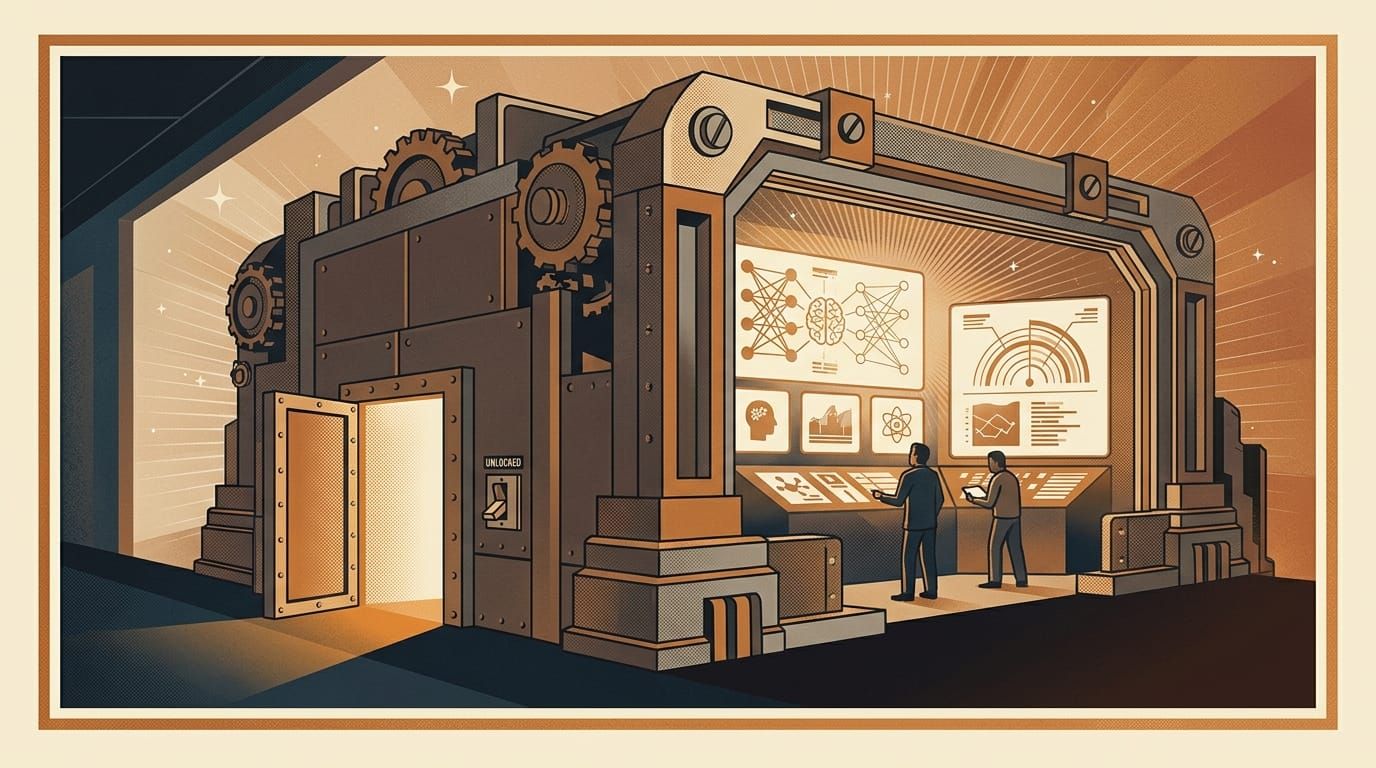

The most safety-conscious AI lab on the planet just leaked its most dangerous model through a misconfigured content management system. Nearly 3,000 internal documents, including draft blog posts describing Claude Mythos as "by far the most powerful AI model we've ever developed," sat in a publicly accessible data cache until Fortune reporters found them.
Anthropic has since confirmed the model exists. They're calling it "a step change" in reasoning, coding, and cybersecurity. A new tier called Capybara, sitting above Opus, "gets dramatically higher scores on tests of software coding, academic reasoning, and cybersecurity, among others." They're testing it with a small group of early access customers and planning a cautious rollout.
Here's where I want to be direct about what actually matters in this story.
The capability leap is interesting but expected. Every frontier lab is pushing the envelope. OpenAI, Google, and Anthropic have all been telegraphing next-generation models for months. What isn't expected is the company that publishes responsible scaling policies and lobbies Congress about AI safety leaving a default CMS setting on "public" and exposing thousands of documents to the open internet.
This is not a sophisticated attack. No nation-state adversary, no zero-day exploit, no social engineering. Someone forgot to flip a toggle. And that single operational failure did more to undermine Anthropic's safety narrative than any competitor or critic could have managed on purpose.
I build on Claude every day. My own systems run on Opus 4.6. I'm not saying this to pile on. I'm saying it because the gap between Anthropic's safety rhetoric and their operational hygiene is the kind of gap that erodes trust across the entire industry. When the company that positions itself as the responsible adult in the room can't lock its own filing cabinet, it gives ammunition to people who argue that self-regulation doesn't work.
Now, about the model itself. The leaked documents describe Mythos as "the ultimate hacking tool" that "can elevate any ordinary hacker into a nation-state adversary." That language is doing real damage. Cybersecurity stocks dropped. Bitcoin slid alongside software equities. CNBC ran the headline. And the framing is now the story, regardless of what the model actually does in controlled testing.
This is the part that frustrates me as a builder. The cybersecurity angle might be accurate in some narrow benchmark sense, but describing your own unreleased model as a nation-state-level weapon in an internal blog post is either reckless or calculated. If Anthropic wanted to pre-frame the regulatory conversation around their next model, mission accomplished. If they didn't, someone in their comms team needs to learn that draft documents should be written as if they'll leak, because apparently they will.
The practical implications for people actually building with these tools are less dramatic than the headlines suggest. A more capable reasoning model is good news for anyone doing serious work with AI. The Capybara tier signals that Anthropic is betting on bigger models, not just more efficient ones, which means the cost curve for frontier capability isn't flattening as fast as some had hoped. And the cautious rollout means most of us won't see Mythos for weeks or months.
What I'm watching is the regulatory response. The White House released a national AI legislative framework this month. Senator Blackburn has a 300-page discussion draft for national AI rules. The timing of this leak, landing the same week that 72% of Global 2000 companies report running AI agent systems in production, hands regulators exactly the kind of headline they need to push for mandatory capability assessments before deployment.
Anthropic will recover from the embarrassment. They'll ship Mythos eventually, and it will probably be impressive. But the lesson here isn't about one company's CMS settings. It's that the organizations asking us to trust them with the most powerful technology in a generation need to earn that trust at every level, from the research lab to the IT closet. Safety isn't just a model evaluation. It's a culture. And cultures get tested by the boring stuff, not the dramatic stuff.
Keep building, — JW