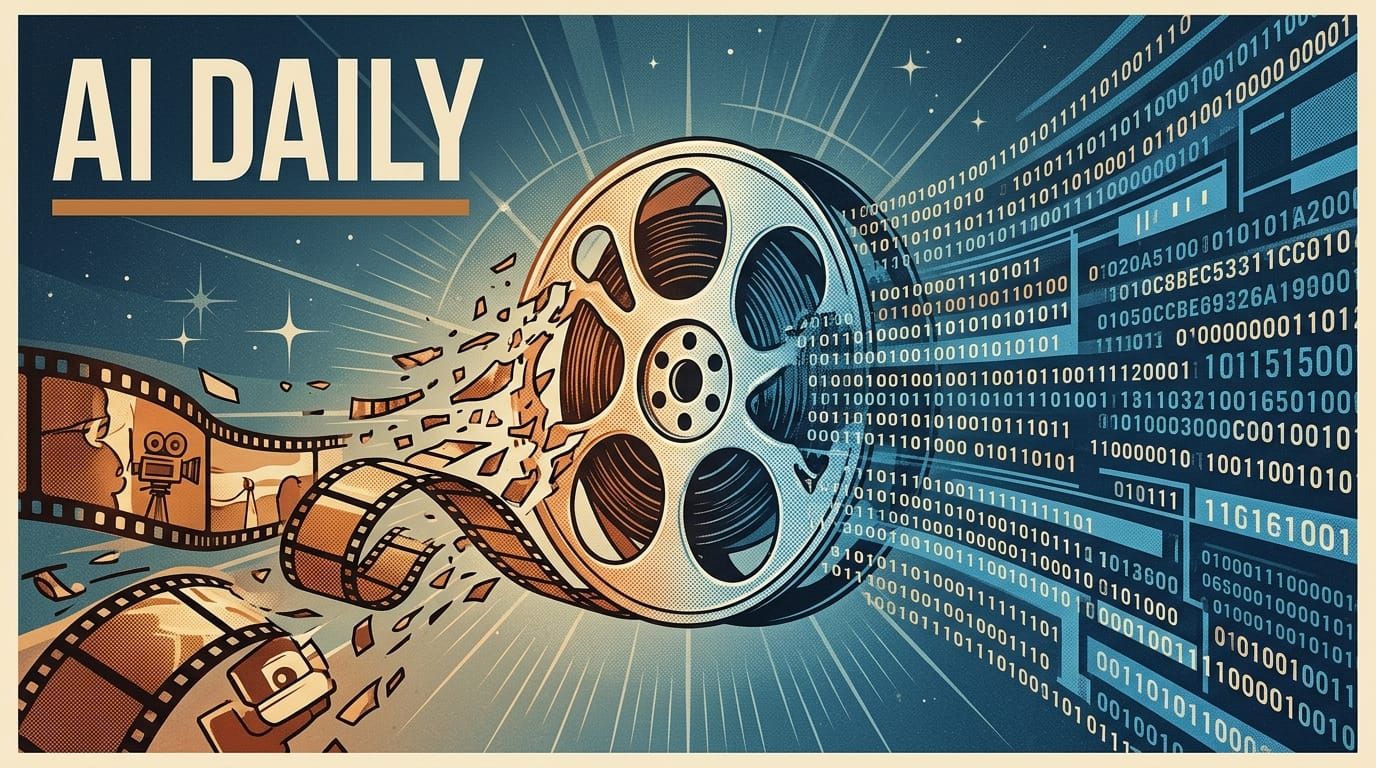

OpenAI is shutting down Sora, the AI video platform it launched to enormous fanfare in late 2025. The consumer app, the API, and the website are all going dark. The billion-dollar Disney deal that let users generate videos with Mickey Mouse? Dead. No money ever changed hands.
The timing tells you everything about where AI companies actually make money right now. OpenAI is pulling the plug on its splashiest consumer experiment at the exact moment its enterprise products are thriving. Codex is printing revenue. Claude Code is winning developer mindshare for Anthropic. Google's Gemini is eating into enterprise search. The competitive pressure is intense and real, and every GPU-hour spent rendering cat videos is a GPU-hour not spent on the products that pay the bills.
Some people will read this as AI failing to live up to its promise. I read it as the opposite. This is what focus looks like. OpenAI raised $110 billion last month and is eyeing an IPO. You don't go public on a product with collapsing engagement metrics and massive compute overhead. You go public on enterprise revenue, developer adoption, and the kind of growth curve that makes institutional investors line up. Sora was a science experiment that got productized too early, and killing it is the most operationally mature decision OpenAI has made in a while.
The deeper lesson for the industry: we are exiting the phase where AI companies ship everything to see what sticks. Video generation, image generation, music, social feeds, consumer apps. The companies that win the next two years will be the ones that pick their fight and commit. OpenAI is betting on enterprise and developer tools. Anthropic is betting on coding, safety, and agent infrastructure. Google is betting on integration across its ecosystem. The "we do it all" era is over, and the market is telling us exactly which bets are paying off.
What about the Disney deal? That collapse is its own signal. Disney was the first major studio to license IP for AI-generated video, and the deal was supposed to validate a new business model. Instead, it validated that even with the most recognizable characters on Earth, you can't manufacture user retention through novelty alone. The content generation layer is necessary but not sufficient. Distribution, community, and creator economics still matter, and Sora had none of those figured out.
OpenAI says it will continue video generation research for robotics training and simulation. That's the right call. Video as a training signal for robots and autonomous systems is a genuinely valuable application of the technology. Video as a TikTok competitor was always a stretch.
The Builder's Take
OpenAI killing Sora is the clearest signal yet that the "ship everything, figure it out later" phase of AI is ending. This is actually good news.
For the past 18 months, the pressure has been to expand. Add more features. Cover more use cases. Launch the chatbot, the image generator, the video tool, the agent framework. Ship the platform play. The fear was that if you didn't do everything, someone else would. Sora's failure proves that fear was wrong. Even with functionally unlimited resources, OpenAI couldn't make a consumer video app work. Not because the technology was bad, but because they were spreading attention across too many surfaces.
If you're maintaining an experiment that isn't generating revenue or clear strategic value, this is your permission slip to kill it. Put those resources into the thing that's working. Focus is not a limitation. It's the competitive advantage that every AI company is now racing to claim.
Keep building,
– JW