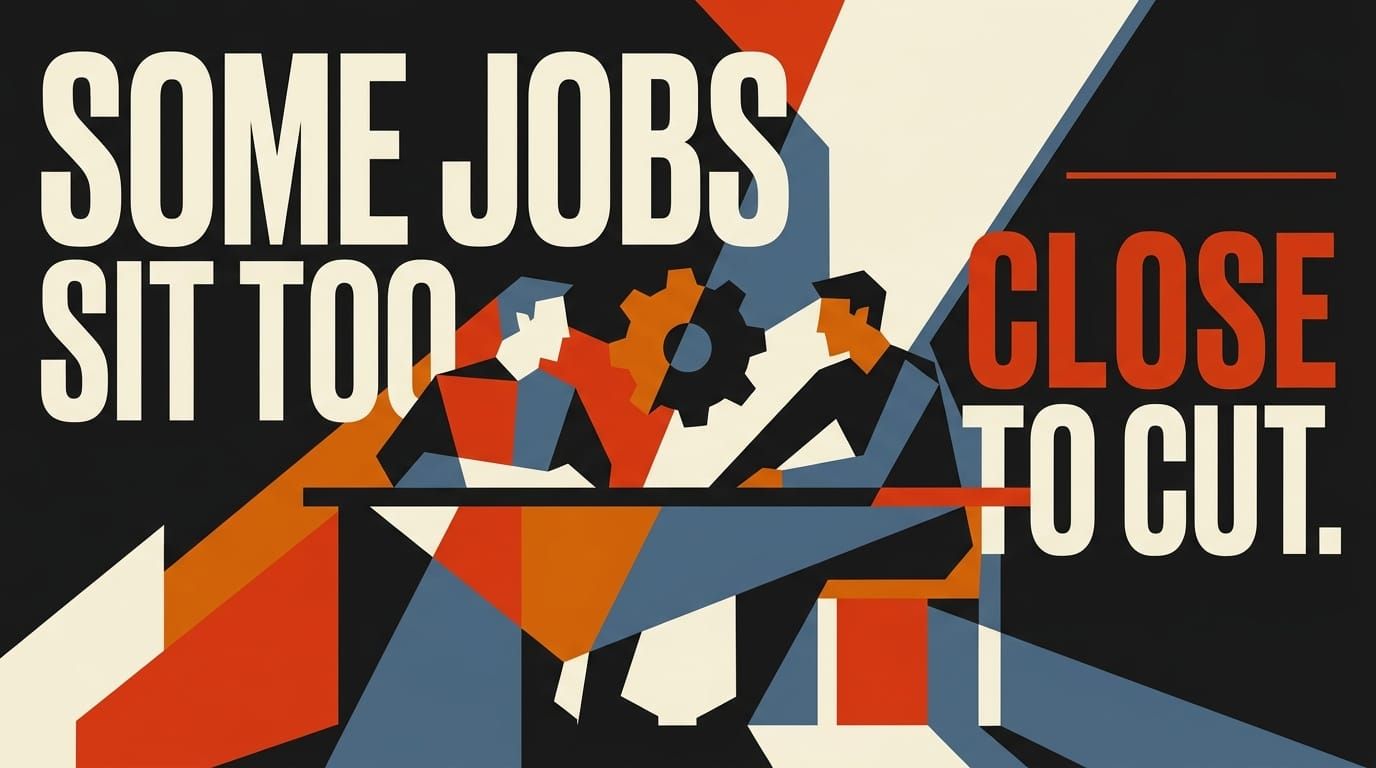

The owner is sitting a few feet from the person whose job is under consideration, someone who has carried the company’s history in their head and answered the phone when a customer needed a familiar voice. The software can probably handle much of the work. The owner still has to look at the person and decide what that means.
Who wants to turn loyalty into a line item?
A 2026 survey of small-business owners found that 33 percent, one in three, named loyalty as the single biggest reason they would not replace an employee with AI. Other reasons followed the same human logic: long service, knowledge of the business that would be hard to replace, a personal sense of responsibility for the employee’s financial well-being, and customers who value their relationship with that specific employee.
The survey’s authors gave the cost a name, the “loyalty payroll.” It is the money owners willingly absorb to protect people they feel responsible for.
The hesitation has very little to do with whether the technology can perform the task. The owner already knows what the software can do. The owner is looking at a person who may have stayed through hard years, learned the strange internal logic of the business, and become part of the promise customers believe they are buying.
At a large company, a job cut becomes “restructuring,” a decision made several layers above the person affected. Run a ten-person shop and there are no layers to hide behind, so you sit across the desk and deliver the news yourself. Same spreadsheet, but a much different thing to bring home with you.
A lot of AI-adoption advice misreads this hesitation as ignorance or cowardice. Owners are told they are behind because they are too busy, too skeptical, or too attached to old ways, but that diagnosis misses the central fact. The barrier is often just proximity. The owner knows the person, knows the family situation in broad terms, knows what customers will lose, and understands that a clean efficiency gain can still leave a human mess behind.
The survey found that 47 percent of owners believe employers should protect jobs wherever reasonably possible, while 31 percent believe jobs should be protected even if doing so reduces profits. Only 15 percent put the survival of the business first, and 7 percent said employers should adopt AI whenever it is financially beneficial. Three-quarters believe they carry more personal responsibility toward employees than larger companies do.
While I think it is asinine to put anything above the survival of the business, the rest of these survey results make sense and align with how I think of these issues.
Most business owners feel personally on the hook for the people who work for them. But it's that conviction that can freeze someone in place for months while the decision goes unmade.
Freezing vs. firing creates a false binary. The better answer is somewhere in between: automate the task and redeploy the person (or part of the person's time).
The owner has to begin with the role, not the employee. Split the work into two buckets. One contains the repeatable tasks a machine can handle, such as sorting information, preparing routine drafts, updating records, or moving data between systems. The other contains the work that depends on judgment, trust, context, and a customer’s confidence in the person on the other end of the relationship.
Then automate the first bucket. The owner acts, the workflow changes, and the hours come back into the business. Those hours need a destination, so point them at the second bucket, where the trusted employee can deepen customer relationships, catch problems earlier, exercise judgment, improve the handoff between people, or take responsibility for work that has been neglected because everyone was buried in administration.
That redesign preserves something really valuable. Small businesses often win through memory, responsiveness, and judgment that customers can feel. A machine can clear the repetitive work so the remaining human work can give even more bandwidth to showing off those qualities.
Redeployment is harder than it sounds though. Some roles are mostly made up of tasks that software can perform, and there may be no obvious second act waiting inside the business. Owners should say that plainly. Loyalty alone doesn't create profitable work and good intentions don't remove the need for a viable role.
The smaller step still works though. Choose one task. Automate the reporting, scheduling, intake, or follow-up that consumes a predictable block of time, then use those hours for one piece of relationship or judgment work that has been waiting. Watch what changes and WAIT. Learn if and where the human contribution becomes more valuable once the repetitive burden is gone.
I think that's a more honest way to approach automation for a small business. It respects the economics, and it respects the fact that a job is attached to a person who has trusted the owner enough to build a life around it.
The loyalty payroll turns into dead weight if it is largely funding work that could realistically be automated. Handled well though, that same money can pay for the redesign of roles, so all of that knowledge, trust, and judgment that took years to build stays inside your team and company.
Loyalty is one of the few real edges a small business has on the Fortune 500, and I say it's worth preserving. Not at the expense of your competitiveness, but by leaning into automation and role redefinition. Who says you can't have your cake and eat it too?
Keep building,
-- JW