
When I evaluate pre-IPO retail access from the family office side, I run a simple test. I ask: who benefits more from this transaction, the buyer or the seller? If the company is engineering broad ownership before a public listing, the answer is almost always the seller. The buyer gets exposure. The seller gets a floor.
OpenAI just closed a $122 billion funding round at an $852 billion valuation, the largest private raise in history. Buried inside it: roughly $3 billion from individual investors, placed through a trio of major banks in what those banks called the largest private placements they've ever completed. And starting this week, Cathie Wood's ARK Invest is carrying OpenAI at about 3% of three flagship ETFs, including ARKK, ARKW, and ARKF.
The company's CFO, Sarah Friar, framed the retail inclusion as mission-aligned. "Not just access to the technology, but access to the financial upside," she said. That's a nice line. I think the upside she's referring to belongs to OpenAI.
Here's the framework I use. Private companies don't need retail capital. OpenAI already had SoftBank ($30 billion), Amazon ($50 billion), Nvidia ($30 billion), and Microsoft in the round. They didn't need three billion more from dentists in Connecticut. What they needed was a dispersed shareholder base walking into the IPO with a cost basis anchored at $852 billion.
That's not inclusion. That's demand engineering.
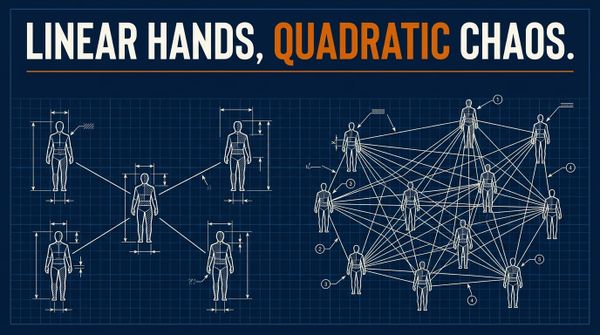
Think about how IPO pricing works. Underwriters want to set the listing price above the last private round to generate first-day pop, but not so far above it that they leave money on the table. When you pre-seed the market with thousands of retail holders who bought at $852 billion, you've effectively set a psychological floor. Those holders don't want to see the stock open below their entry. They become natural buyers on dips. They become evangelists. They become the bid.
The ARK ETF play makes it even cleaner. Regulations allow ETFs to hold up to 15% in illiquid assets like private company shares. By getting OpenAI into three ETFs before the IPO, you create a passive demand layer. Every dollar that flows into ARKK now carries a small allocation to OpenAI. The retail investor buying the ETF might not even know they own it.
I've seen this playbook before. It's borrowed from investment banking's greatest hits. When Goldman Sachs took Facebook public, they ran a private placement through their wealth management clients first. Those clients became the price floor for the IPO. The mechanism here is identical, just scaled up by a factor of ten and wrapped in the language of access.
Now look at SoftBank. Masayoshi Son just took a $40 billion unsecured bridge loan from JPMorgan, Goldman Sachs, and four Japanese banks. The loan has a 12-month term, maturing March 2027. An unsecured loan of that size with a 12-month window is not a long-term strategic bet. It's a bridge to a liquidity event. The lenders are pricing in an OpenAI IPO in late 2026 or early 2027. If they weren't confident in that timeline, they wouldn't lend unsecured at that scale.
SoftBank's total OpenAI position is now roughly $65 billion, representing about 13% ownership. That loan needs to be repaid or refinanced within a year. The only realistic exit at that scale is a public offering. The IPO isn't a possibility. It's a scheduling exercise.
And here's the part that should give retail investors pause. While OpenAI was engineering its shareholder base, the secondary market was telling a different story. Next Round Capital, which has handled $2.5 billion in secondary transactions, reported that institutional investors holding $600 million in OpenAI shares couldn't find buyers. Bids were coming in at $765 billion, a 10% discount to the primary round valuation. A year ago, those shares would have cleared in days. Now, the same firm says it has $2 billion in buyer demand ready to deploy into Anthropic.
So the sophisticated money is marking OpenAI down while the retail channel is being opened up at the primary round price. I don't think that's a coincidence.
I want to be clear: I'm not saying OpenAI is a bad company or that the stock won't work. They're generating $2 billion a month in revenue. They claim to be growing four times faster than Alphabet and Meta did at comparable stages. Those are real numbers. But there's a difference between a good company and a good entry point, and the retail access play here is designed to blur that distinction.
When a company spends this much effort making sure regular investors can participate before the IPO, the question isn't whether they're being generous. The question is what they need from those investors that institutions aren't providing.
The answer, in almost every case I've evaluated, is a price floor.
Keep building, -- JW